








Beyond the therapy session: why non-face-to-face work is a vital part of your therapy journey

Steph Reeves
19 Jan 2026
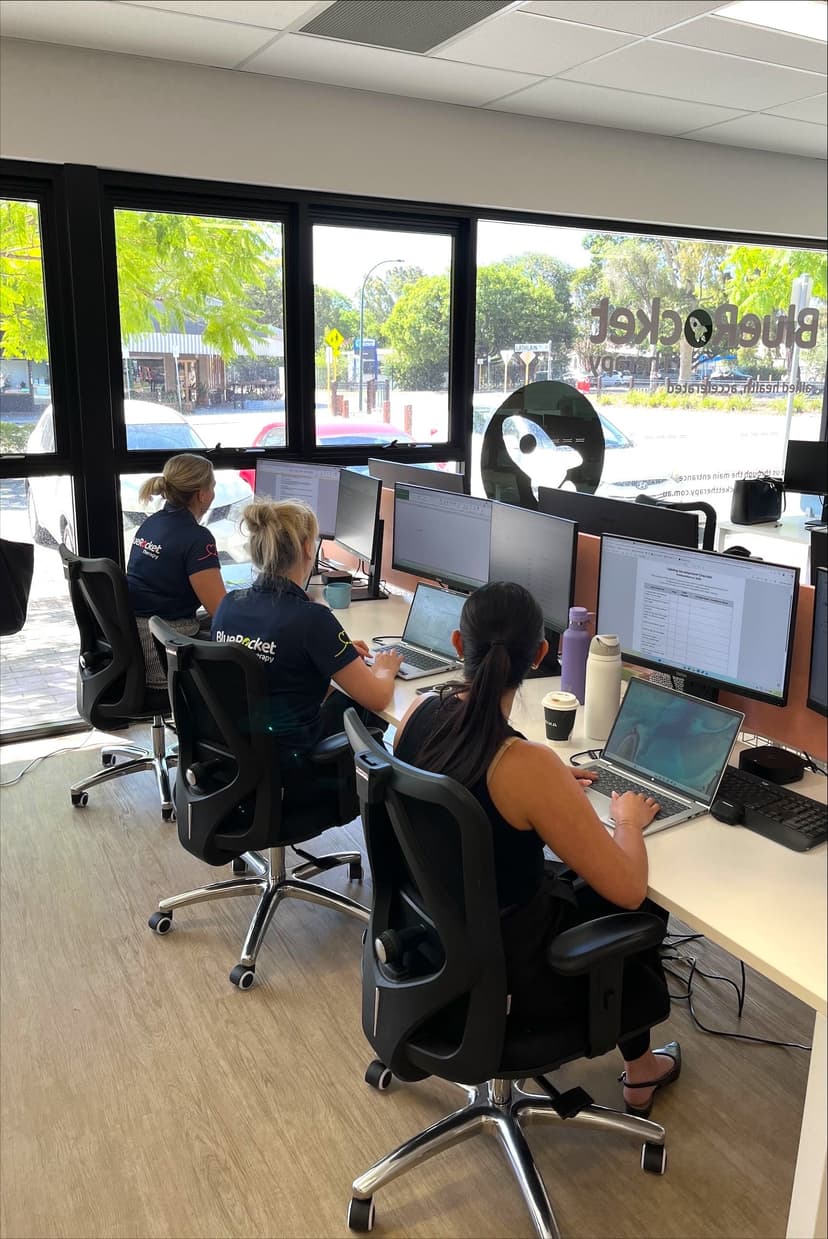
When most people think of therapy, they picture face-to-face sessions, the time spent building skills, practising strategies, or trialling equipment. But what happens behind the scenes is just as important. Non-face-to-face tasks are the backbone of quality therapy. They ensure sessions are meaningful, personalised, and connected to real-life outcomes.
At BlueRocket Therapy, we know that therapy doesn’t stop when the session ends. A significant amount of time goes into planning, documenting, collaborating, and advocating, all of which directly support progress and long-term success for participants and their families.
Here’s what that work looks like, and why it matters:
Preparation
Every effective therapy session starts long before the therapist arrives. Preparation ensures that each session is purposeful, targeted, and aligned with the participant’s needs and goals. This includes:
- Reviewing assessments, reports, and background information.
- Researching evidence-based strategies and interventions.
- Designing session plans tailored to individual needs.
- Preparing visual supports, resources, and home programs.
Documentation
Accurate documentation is essential for safe, consistent, and effective therapy. It allows progress to be measured, strategies to be refined, and funding to be justified. Documentation tasks include:
- Writing detailed progress notes after each session.
- Writing and updating therapy goals.
- Recording outcome measures and tracking progress over time.
- Maintaining accurate records to support continuity of care.
Communication & Collaboration
Therapy is most effective when everyone involved is working together. Non-face-to-face time is often spent building strong communication pathways and ensuring a team-based approach:
- Liaising with families and informal supports, providing education, training, and sharing resources, strategies, and progress.
- Coordinating with other allied health professionals and formal supports for a team-based approach.
- Communicating with schools, workplaces, and community services.
- Attending case conferences, team meetings, and goal review sessions.
- Advocating for participant needs and appropriate supports.
Resource Development
Resources created outside of sessions play a major role in supporting ongoing skill development and independence. This work ensures therapy continues beyond the clinic or home:
- Creating customised visual supports, schedules, and social stories.
- Designing home programs to support therapy goals between sessions.
- Adapting resources to suit individual sensory, cognitive, or communication needs.
- Preparing training materials for families, carers, and support staff.
- Updating and refining resources as the participant’s needs change.
Assessment & Report Writing
Thorough assessments and well-written reports are vital for accessing supports, guiding therapy, and securing funding. This detailed behind-the-scenes work includes:
- Interpreting assessment results and linking findings to NDIS goals, capacity building, and participation outcomes.
- Writing comprehensive reports such as Functional Capacity Assessments (FCA).
- Preparing assistive technology (AT) justification reports and recommendations.
- Developing therapy intervention plans and summary reports.
- Documenting progress over time to support plan reviews and funding.
Follow-Up & Advocacy
The work doesn’t end when the session does. Ongoing follow-up and advocacy ensure that recommendations are implemented and participants receive the support they need:
- Monitoring implementation of strategies, equipment, or supports.
- Liaising with suppliers and providers of assistive technology.
- Advocating for participant needs with schools, workplaces, and support services.
- Supporting families to navigate NDIS processes and funding pathways.
- Ensuring recommendations are actioned to achieve meaningful outcomes.
The Bigger Picture
Non-face-to-face work is not “extra”, it’s essential. It’s where therapy is tailored, coordinated, and translated into real-world change. These behind-the-scenes tasks ensure that every hour spent face-to-face is backed by preparation, collaboration, and evidence, leading to safer, more effective, and more meaningful outcomes for participants.
At BlueRocket Therapy, we’re committed to delivering support that extends far beyond the session itself, because lasting progress happens when therapy is woven into every part of life.
Check out our quick reference card for NDIS therapy costs (PDF). It's a one-page reference for understanding what NDIS therapy actually costs, what should be included, and how to map plan funding to a realistic number of sessions.
Posts by Steph Reeves

Therapy Approaches and Practices
Jul 18, 2026
Home visits, telehealth, school or clinic? Choosing the right therapy setting for your participant
Steph Reeves / min read

Therapy Approaches and Practices
Jun 25, 2026
Neurodiversity-affirming therapy: What it means and what to look for
Steph Reeves / min read

Therapy Approaches and Practices
Jun 09, 2026
The First Assessment Package
Steph Reeves / min read

Family and Carer Support
May 19, 2026
Supporting your child's development: a guide for parents of 2 to 5 year olds
Steph Reeves / min read

NDIS Guides and Resources
May 13, 2026
What is dysphagia? Understanding swallowing difficulties
Steph Reeves / min read

NDIS Guides and Resources
Apr 15, 2026
Getting NDIS goals right: a practical guide for therapists and families
Steph Reeves / min read
Join our Newsletter
Get the latest allied health insights straight to your inbox.