





NDIS Early Childhood Intervention: what parents and Support Coordinators need to know

Anna Sallows
05 Jun 2026
Navigating early childhood intervention can feel overwhelming, especially when things keep changing. In recent years, the way the NDIS supports young children has shifted, and now there are new programs to understand alongside it. If you're supporting a family with a young child who might benefit from therapy, this guide will walk you through what early childhood intervention actually is, who it's for, what therapy looks like in practice, and how the new Thriving Kids program fits into the picture.
What is early childhood intervention under the NDIS?
Early childhood intervention, or ECI, is support that helps children under 9 years old develop skills during a critical period when their brains are most responsive to learning. The NDIS funds early childhood intervention through individual plans for children who have developmental differences or support needs.
The word "intervention" might sound clinical, but what it really means is specialised support tailored to help your child learn and develop. It's about meeting children where they are, building on their strengths, and helping them gain skills they need for everyday life. An Occupational Therapist might help with sensory processing or fine motor skills. A Speech Pathologist might support communication development or feeding skills. The focus is always on what your child can do and what they can learn, not what they can't do.
Who is eligible for NDIS early childhood intervention?
To access NDIS-funded early childhood intervention, a child must be under 9 years old and have support needs related to a developmental difference. The NDIS uses what's called the Early Childhood Approach to assess eligibility, which looks at how a child is developing across different areas like communication, physical development, social and emotional development, and learning.
A formal diagnosis isn't always required. What matters is whether the child's development looks different from what's typical for their age and whether they would benefit from support. A Support Coordinator can help gather the information needed to assess whether a child might be eligible.
Thriving Kids: what it means for families and Support Coordinators
In recent years, the Federal Government announced the Thriving Kids program, a $4 billion initiative aimed at providing early intervention support to more children. Thriving Kids is designed for children under 9 with what the Federal Government has described as "mild to moderate" support needs. It sits alongside the NDIS early childhood intervention program and offers another pathway for families to access therapy support.
It's worth noting that advocacy groups in the disability and neurodiversity community have raised concerns about how "mild to moderate" is defined and whether this framework might inadvertently limit access for some children. The details of how Thriving Kids will roll out are still being finalised, so the landscape is still evolving.
What this means for Support Coordinators and families is that there may now be multiple avenues to explore. A Support Coordinator's job includes helping families understand which pathway might be right for their child, based on the child's needs and what funding is available. Some families may access NDIS ECI, others Thriving Kids, and some may combine both or start with private services and then move to publicly funded support.
What early intervention therapy actually looks like
If you've never worked with a therapist before or you're not sure what to expect, the idea of "intervention" can sound mysterious. Here's what it actually looks like in practice.
An Occupational Therapist working with a young child might focus on:
- Sensory processing support—helping children understand and respond to sensory information from the world around them.
- Fine motor development—building strength and coordination in hands and fingers for tasks like grasping, holding cutlery, or drawing.
- Daily living skills—helping children learn to feed themselves, manage bathroom routines, get dressed, and other everyday activities.
- Play-based strategies—using play to build skills, because children learn best through doing things that interest them.
A Speech Pathologist might support:
- Communication development—helping children understand language and express themselves, whether through words, gestures, or other ways of communicating.
- Social communication—learning how to interact with others, take turns in conversation, and read social cues.
- Feeding support—for young children who have difficulty with eating, drinking, or swallowing.
Where does therapy happen? One of the most important principles in early childhood intervention is that children learn best in their natural environments. That means therapy often happens where the child spends their time—at home with family, at daycare or preschool, or at school. A therapist might visit your home to work with your child in the place where they actually need to use new skills. Or they might visit daycare and work with your child in that setting, coaching educators on how to support development throughout the day. Some therapy also happens via telehealth or in a clinic setting, depending on what works best for your family and what's available in your area.
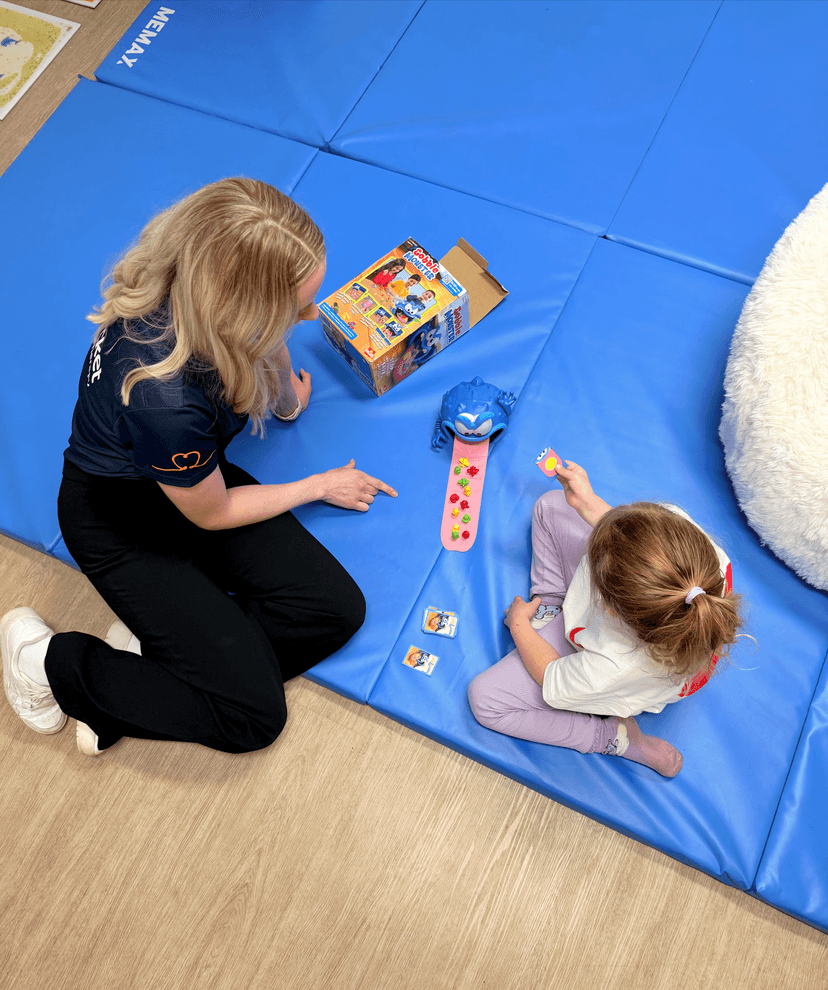
A typical therapy session might look like this: the therapist arrives and observes your child at play or in everyday activities. They might suggest ways for you to support learning—a small change to how you set up play, or a strategy to use during mealtimes. They work with your child too, modelling skills and playing alongside them. They take notes on what's working and what to focus on next. The whole thing is child-led and play-based. There's no flashcards or repetitive drills with a good early childhood therapist. Learning happens through real interactions and play.
How to know if your child could benefit from early intervention
This isn't a diagnostic checklist, and early childhood development varies widely from child to child. But here are some general signs that a child might benefit from early intervention support:
Communication feels delayed—your child isn't using words, or is using fewer words than peers, or struggles to understand what you're saying.
Movement or coordination seems different—difficulty crawling, walking, climbing, or managing fine motor tasks like picking up small objects.
Sensory responses feel strong—your child covers their ears at loud noises, avoids certain textures, or seeks out lots of movement and spinning.
Social interaction looks different—your child doesn't make eye contact, doesn't respond to their name, or struggles to engage with peers.
Daily living skills are taking longer to develop—difficulty with feeding, dressing, or toileting compared to other children the same age.
Learning and play look different—your child isn't playing with toys in typical ways, or struggles to learn new things.
The key thing to understand is that early intervention is not about fixing something wrong. It's about giving your child the best opportunity to develop skills and confidence, and to thrive in their own way. Children develop at different rates and in different ways, and support early on can make a real difference.
For a fuller picture of development at this age, see our guide for parents of 2 to 5 year olds.
Starting early intervention without an NDIS plan
If you're wondering whether your child might benefit from support but they don't have an NDIS plan yet, remember that private early intervention services are also available. Many families start with a private assessment or a few sessions with a therapist to understand where their child is at. That can be a helpful first step.
You can see how private assessments and sessions work, including fees, on our fees page — no referral or plan required to get started.
Questions to ask an early intervention provider
When you're looking for an early intervention provider—whether for a formal assessment or ongoing support—here are some practical questions to ask:
- What's your approach to therapy? Do you use play-based and strength-focused methods?
- How do you involve families? Will you teach me strategies I can use at home?
- Where does therapy happen? Can you visit our home or daycare, or is it clinic-based?
- How do you measure progress? How often do you check in about what's working?
- Are you neurodiversity-affirming? Do you approach differences as diversity rather than deficits?
- What does a typical therapy block look like? How many sessions, how often, for how long?
Frequently asked questions
Do I need a diagnosis for my child to access early intervention?
Not necessarily. The NDIS Early Childhood Approach looks at how a child is developing, not just whether they have a diagnosis. However, having a diagnosis can sometimes make the assessment process clearer. If your child doesn't have a diagnosis yet, talking with your GP or a developmental paediatrician can help.
What's the difference between early childhood intervention and early childhood education programs?
Early childhood education (like preschool or kindergarten) is for all children and focuses on learning and socialisation. Early childhood intervention is specialised therapy support for children who have support needs. They're complementary—many children benefit from both.
How long does early childhood intervention usually go on for?
It varies. Some children might benefit from a block of therapy for 6 to 12 weeks, then reassess. Others might have ongoing support over a longer period. The NDIS plan is reviewed regularly, so you and the team can adjust support based on how your child is progressing.
Can my child have early intervention and attend daycare or preschool at the same time?
Absolutely. In fact, it's common. A therapist can even coordinate with educators at your child's daycare or preschool to make sure everyone's supporting your child's development in consistent ways.
If you're supporting a child who might benefit from early intervention — with an NDIS plan or without one — our early childhood team works with families across Perth and Greater Melbourne. Get in touch or refer directly through our website.
This blog is for informational purposes only and is not a substitute for individualised clinical advice. Every child is different. If you're concerned about your child's development, the right next step is a conversation with a qualified clinician who can get to know your child and family.


Join our Newsletter
Get the latest allied health insights straight to your inbox.