




Why BlueRocket is building an AI native organisation
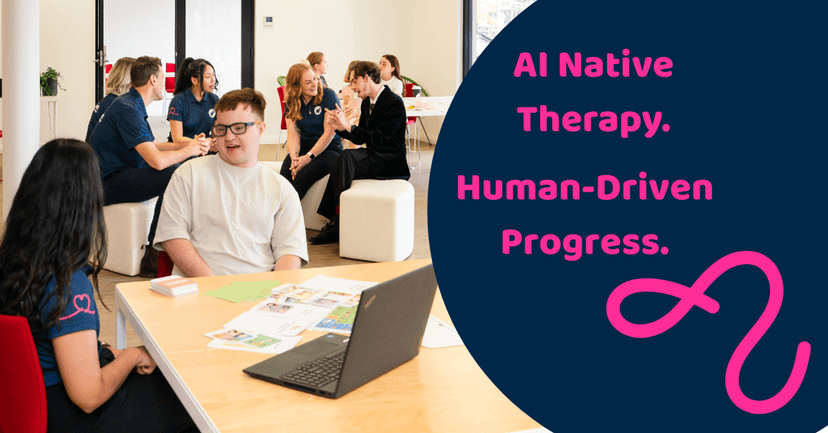

At BlueRocket Therapy, we think about AI a little differently.
You’ll hear a lot of organisations talking about “using AI”. For many of them, that means adding a tool here or there.
Our approach is different. We are building an AI-native organisation.
That doesn’t mean AI replaces clinicians. It doesn’t mean clinical judgement is automated. And it certainly doesn’t mean therapy becomes less human.
What it means is that we design our systems, workflows and culture from the ground up with one question in mind:
How can technology support clinicians to do their best work?
Because when you remove unnecessary friction from a clinician’s day, something important happens.
They get more time and mental energy to focus on what actually matters — helping clients build capacity and achieve their therapy goals.
What being AI-native means in practice
For us, being AI-native starts with culture.
We encourage our team to ask a simple question about the work they do:
Is there a smarter way to do this?
Sometimes the answer involves AI.
If something is repetitive, manual, or done every day, we should at least explore whether technology can support it. Not to replace the clinician, but to remove the friction around the work.
The second part of being AI-native is ensuring our AI systems are fit-for-purpose.
We are building our own AI-driven systems and workflows rather than relying entirely on off-the-shelf software. That means we can shape our systems around the real needs of clinicians.
We’re not waiting in a global support queue or hoping a software company eventually solves our problems.
Our systems are clinician-driven.
If something slows the team down, we improve it.
If something helps them do their job better, we prioritise it.
That feedback loop matters, because the goal is simple: build systems that genuinely support clinicians rather than getting in their way.
Leaning into AI — in a responsible way
AI is already part of everyday life. Clinicians use it. Organisations use it. Clients encounter it in many parts of the world around them.
The reality is that if organisations pretend AI doesn’t exist, people will still find ways to use it — often in environments that aren’t secure or governed properly.
Our view is that the more responsible approach is to lean in, but do it properly.
At BlueRocket, AI is a tool. It’s no different in principle to a calculator. It can help with structure, speed and information — but it does not replace professional judgement. Clinical reasoning always sits with the clinician.
We also have clear internal policies about how AI can and cannot be used, including how client information is protected.
The goal isn’t to automate therapy. The goal is to support clinicians so they can focus their energy where it actually adds value. And importantly, any efficiency gained doesn’t disappear into the system. It gets reinvested.
Less time spent on repetitive admin means more time spent on preparation, reflection, communication with families, and delivering high-quality therapy.
More time is spent on actual human connection.
Some Practical Examples
Being AI-native isn’t theoretical. It shows up in practical ways that support clinicians day to day.
Supporting case note drafting
Documentation is important, but it shouldn’t consume the energy clinicians need for therapy.
We use AI to support structured case note drafting. Clinicians start with a well-structured draft and then refine it using their own judgement and clinical reasoning.
Every note is reviewed and approved by the clinician.
The difference is that the starting point is better structured, which reduces time spent on repetitive formatting and allows clinicians to spend time and focus on the substance of what they are documenting.
AI-supported session transcription
Anyone who has tried to type notes while running a session knows how distracting it can be.
Secure transcription tools allow clinicians to focus on the interaction rather than the keyboard.
Instead of splitting attention between conversation and documentation, clinicians can stay present in the session and then review and structure the information afterwards.
It’s a small change, but it can make a meaningful difference to how connected a session feels.
Intelligent scheduling
Scheduling might seem operational, but it has real impact on clinicians and clients.
We use smart scheduling tools that help cluster appointments geographically and reduce unnecessary travel.
Less travel means less fatigue, more predictable schedules and more energy available for therapy sessions.
It also helps ensure that funding is used where it matters most — supporting therapy rather than absorbing avoidable logistical costs.
Secure AI assistants for internal queries
Our team can also use secure internal AI assistants to query information within our secure systems.
That might mean quickly retrieving relevant context about a client, such as a summary of the last few sessions, or accessing internal knowledge resources.
The AI surfaces information. The clinician interprets it.
Again, the goal is to reduce friction so clinicians can focus on applying their expertise.
Why this matters for clients
For clients and families reading this, the most important thing to know is simple.
- Your therapist is still your therapist.
- AI does not replace clinical judgement.
- It does not make decisions about your services.
What it does is reduce the administrative load around therapy so clinicians can focus more of their time and energy on helping clients progress.
The human relationship remains at the centre of everything we do. Whether it's through face to face sessions, phone calls, and all forms of clinician-client connection.
Technology just gives us more time to focus on relationship building and therapy goals, rather than admin.
Why this matters for clinicians
We’re building an environment where clinicians can work at the top of their scope.
That means reducing unnecessary administrative friction and supporting clinicians with systems that make their work easier rather than harder.
It also means creating a culture where innovation is encouraged and where clinicians can influence how the systems around them evolve.
This approach won’t resonate with everyone, and that’s okay.
But it will resonate with clinicians who want to work in an organisation that is actively thinking about the future of allied health rather than simply repeating the past.
Building the future of allied health
Allied health is evolving quickly.
Technology will inevitably play a larger role in how services are delivered and supported.
The real question isn’t whether AI will be part of the future.
It’s how thoughtfully it will be used.
At BlueRocket Therapy, we are choosing to build that future deliberately.
We’re designing systems that support clinicians, protect clinical judgement, and ultimately allow therapists to focus on what they do best: helping people build capacity and achieve meaningful progress in their lives.
If this approach resonates with you
BlueRocket Therapy is still early in its journey, which means there is a real opportunity to help shape what we are building.
If you are a clinician who is curious about how technology can support better therapy outcomes — while still protecting the human elements that make this profession meaningful — we would love to speak with you.
We’re not just building another therapy provider.
We’re building the future of allied health.
And we’re doing it intentionally.
Join our Newsletter
Get the latest allied health insights straight to your inbox.