




AAC Assessment Services in Adelaide
AAC (augmentative and alternative communication) assessments in Adelaide for NDIS participants and private clients. We come to you at home, school or kindy, across Greater Adelaide, from Elizabeth and Golden Grove in the north to Noarlunga and Seaford in the south, west to the coast at Semaphore and Glenelg, and east into the Hills to Mount Barker and Woodside. Our speech pathologists help with goals like sharing wants and needs, joining conversations and communicating more independently. We'll trial options with you, from communication boards to speech-generating devices.

What is AAC?
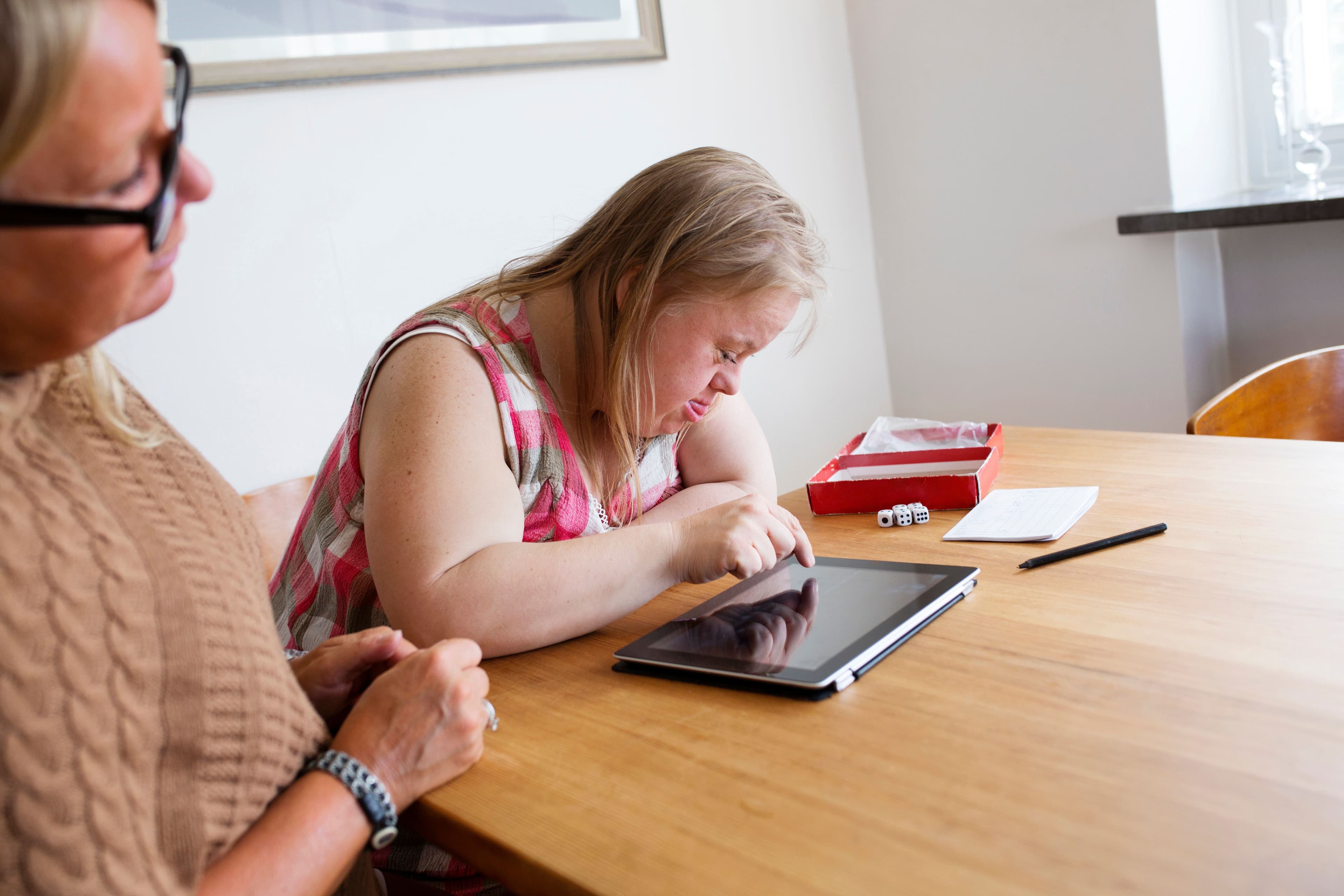
Augmentative and Alternative Communication (AAC) refers to a wide range of tools and strategies that support people who communicate in ways other than speech. From simple picture boards to high-tech speech-generating devices, AAC provides people with more options to express themselves, connect with others, and participate in daily life.
At BlueRocket, our experienced Speech Pathologists provide evidence-based AAC assessments and support to help each person explore and find the communication system that works best for them. We work alongside families and individuals to empower authentic communication, self-expression, and meaningful participation at every stage.
Steps Involved
Our AAC service is tailored to each client and includes a comprehensive process to identify and provide the most effective support.
Initial consultation & communication assessment
Our qualified Speech Pathologists assess your current communication abilities, goals, and daily environments.
AAC device trials
We explore a range of AAC options together to find what works best for each individual. AAC devices range from low-tech to high-tech solutions, including:
- Direct access device – allows the person to select messages on a touch screen or with other physical inputs, such as a pointer, joystick, or keyboard.
- Pragmatic Organisation Dynamic Display (PODD) – a communication system using words and symbols, available in either a physical book or a digital format (for example, on a tablet or computer).
- Switch access – enables people to operate an AAC device using an adaptive switch. A simple button can be activated by pressing with the hand, foot, or finger, or by a head movement, or through alternative access such as blowing or biting. This allows the person to make selections that generate speech, text, or other outputs.
- Communication board – a visual tool for creating messages by pointing to or selecting symbols, pictures, words, or letters. These can be paper-based or displayed digitally on a screen.
- Eye gaze – a hands-free method of communication that uses a specialised camera to track a person’s eye movements to control a computer or AAC device.
Selection, funding & report writing
Once the best AAC system is identified, we prepare a detailed report to support NDIS funding or other supports. We also collaborate with Occupational Therapists to ensure physical access needs are considered.
Training & ongoing therapy
We provide training for the client and their support network, along with ongoing therapy to embed AAC use into everyday routines at home, school or work.
Who We Support
AAC is designed to support people of all ages who have difficulty with communication. This may include:
- NDIS participants who need communication devices and support for funding applications.
- Children with developmental delays, autism or speech and language needs.
- Adults with acquired conditions such as stroke, traumatic brain injury or degenerative conditions.
The purpose of AAC is to provide individuals with a reliable way to express themselves, whether temporarily or long-term. AAC may supplement existing speech or replace it altogether, depending on the person's needs. These tools not only help users communicate, but also increase social participation, learning and emotional wellbeing. Our approach is highly individualised, ensuring that each AAC system is suited to the client's environment, goals, and cognitive and physical abilities.


Frequently Asked Questions
What is AAC?
AAC stands for Augmentative and Alternative Communication. It means any way of communicating that supports or replaces spoken words.
Some people are non-speaking and do not use speech as their main way of communicating. Others may speak some of the time but use AAC when speech is difficult, tiring, unclear, or not their preferred way to communicate. AAC allows everyone to share their thoughts, feelings and ideas in the way that works best for them.
Does AAC replace natural speech?
AAC may supplement existing speech or replace it altogether, depending on the client's needs. People who can and want to use speech still do so, while AAC gives extra support when speech is not available, reliable or preferred.
For non-speaking people, AAC may be their primary way of communicating. For others, it can be something they move between depending on energy, context or clarity.
Importantly, research shows that AAC does not stop speech from developing. In many cases, it encourages communication growth by reducing frustration and giving people a consistent way to express themselves.
Is AAC only for high-tech devices?
No, AAC can include:
• No-tech: gestures, facial expressions, pointing, signing, or drawing
• Low-tech: picture cards, communication books, letter boards, or writing
• High-tech: apps or speech-generating devices.
Who delivers the service?
AAC services are provided by Speech Pathologists, who specialise in communication systems and language development. Occupational Therapists may also be involved where needed, especially when supporting the physical access to AAC (e.g. positioning, switch access or fine motor skills), and making sure the AAC system fits smoothly into a person’s daily routines and environments for practical, everyday use.
Can AAC be funded by the NDIS?
Yes, AAC can be funded by the NDIS.
At BlueRocket, we provide comprehensive support with AAC trials and funding applications. This means we work alongside clients and families to explore different options, trial devices, and make sure the chosen AAC system is the right fit. We then support the application process so clients can access the AAC tools they need to communicate in ways that feel effective and empowering.

Why Choose BlueRocket Therapy?
At BlueRocket, we take an innovative, evidence-based approach and are committed to staying at the forefront of industry best practices. Whether you're just getting started or looking to explore your options, we're here to make it easy.
Every funding type in one place
NDIS, private, Medicare and Support at Home. If your funding changes, you can stay with the same team.
Experienced clinicians who come to you
Every clinician has at least three years’ experience and visits you at home, school, daycare or in the community.
Strengths-based, neurodiversity-affirming practice
We build on what someone can already do, rather than fitting them into a box that wasn’t made for them.
Reports you can actually use
Plain language, structured so plan managers, schools and support coordinators can act on them.